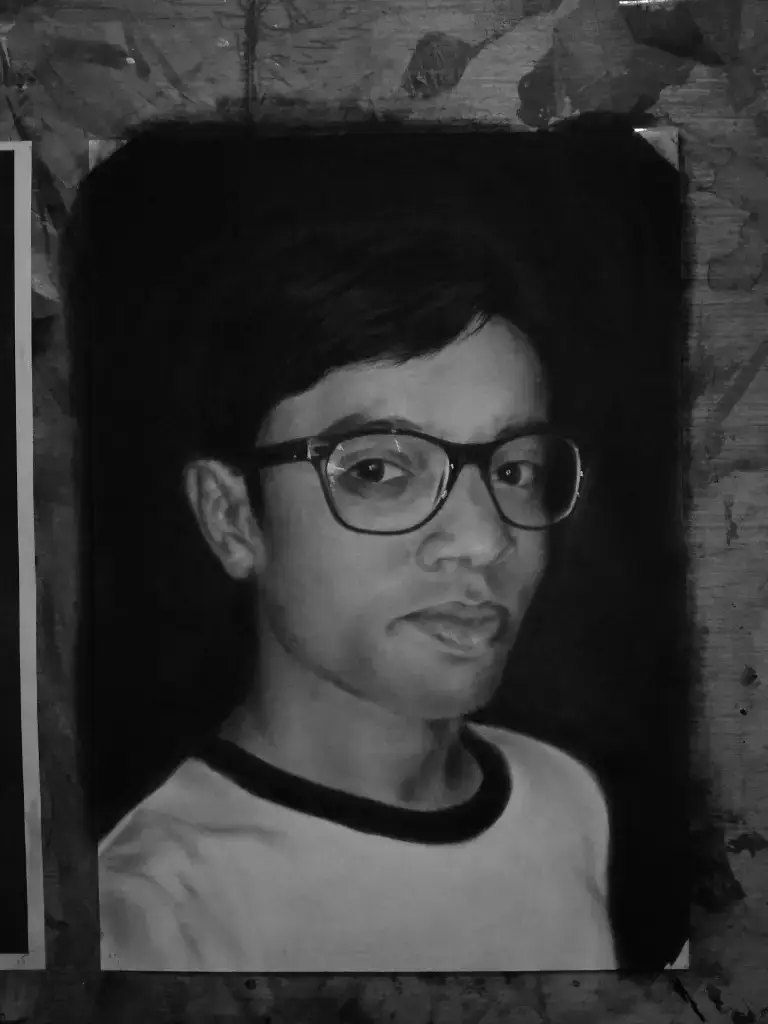
You’ve decided to commission a custom portrait. Awesome. You’re already winning at gift-giving. But then comes the hardest part of the entire process: picking the reference photo.
As an artist who has drawn hundreds of faces across India, I need to tell you a harsh truth: my pencils are only as good as your photo. If you send me a blurry screenshot from a 2012 Facebook post where your uncle looks like a pixelated potato, I am going to draw a very accurate, hyper-realistic... pixelated potato.
A breathtakingly detailed drawing requires a breathtakingly clear photo. But what makes a photo "good"? In this guide, I'm going to walk you through exactly how to pick a reference photo that won't make your portrait artist pull their hair out.
Rule 1: Lighting is Everything (Death to the Camera Flash!)
If there is one golden rule in art, it’s this: light creates form. When I look at a face, I don't just see a nose and eyes. I see a complex map of highlights and shadows.
Natural Light vs. The Dreaded Flash
The absolute best photos are taken in natural sunlight—specifically, near a large window or outside on an overcast day. Natural light wraps around the human face like a warm hug, creating gentle shadows that show off bone structure.
But the camera flash? The flash is the enemy. It blasts the face with so much light that it erases every single shadow. Without shadows, the face looks completely flat. A flat photo results in a flat drawing. Please, step away from the flash.
Deepak's Lighting Cheat Code:
Find a photo where one side of the face is slightly brighter than the other. If you see a small triangle of light on the shadowed cheek, jackpot! That’s called "Rembrandt lighting," and it makes for the most dramatic, 3D-looking pencil sketches in the world.
Rule 2: The "Zoom-In" Test
We take thousands of photos on our phones, but the moment you send a photo through WhatsApp or Instagram, those apps compress it to save space. What looked sharp on your screen is suddenly missing 80% of its details.
Can You See the Soul?
Before you send me a photo, perform the "Zoom-In Test." Open the photo and zoom in as far as you can on the eyes. What do you see?
Can you see the individual eyelashes? The little reflection of the window in their pupil? If the answer is yes, you have a winner. If the eyes look like a smudged watercolor painting, it's too blurry. The eyes are the soul of the portrait—if I have to guess what their eyes look like, the drawing won't look like them.
Pro Tip: Try to send me the original camera file via email or "Send as Document" on WhatsApp so it doesn't get compressed.
Rule 3: Genuine Emotion > Fake Smiles
We’ve all been trained to yell "Cheese!" and slap on a stiff, toothy smile for the camera. While these are fine for your grandma's fridge, they don't always make the best fine art.
A forced smile looks... forced. The neck tenses up, the eyes don't crinkle. Instead, look for candid moments. A photo taken mid-laugh where the joy reaches their eyes, or a quiet, thoughtful resting face. These natural expressions capture the real person, not the "camera-ready" version of them.
Rule 4: The Magic of Combining Photos
One of the coolest things about commissioning handmade art is that we can bend reality. What if you want a portrait of your parents, but they haven't taken a good photo together since 1998? Or what if you want to create a memorial portrait featuring a grandparent holding a new baby they never got to meet?
I can combine multiple photos into one seamless drawing. But, there's a catch:
- Eye Levels Must Match: If one photo is taken looking down from a balcony, and the other is taken looking up from the floor, putting them next to each other will look like a weird funhouse mirror.
- Lighting Direction: If the sun is hitting Dad from the left, and hitting Mom from the right, the final drawing will look physically impossible.
The Hall of Fame: Mistakes to Avoid
To summarize, here is a quick list of photos that make me cry (and not in a good way):
- The Distant Subject: If they are a tiny speck standing in front of the Taj Mahal, zooming in will not help me draw their face.
- The Snapchat Filter: Filters change the shape of the jaw and make eyes huge. If I draw a filtered photo, I'm drawing the filter, not the person.
- The Chopped Head: Photos where the top of the head or the chin is cropped completely out of the frame.
- Group Selfies: The wide-angle lens on a front camera distorts faces if you hold it too close (hello, giant noses!).
Still Not Sure? Let Me Look at It!
Finding the "perfect" photo is stressful, especially if it's a surprise gift and you're secretly stealing photos from their Instagram.
You don't have to guess. I offer a 100% Free Photo Consultation via WhatsApp before you pay a single rupee. Send me the 3 or 4 photos you're debating between. I'll give you my honest artist opinion on which one will look the most badass on paper.
Order Now WhatsApp Your Photos to Deepak